
For professionals
Training in FaceFormer therapyThe seminar for your practice
For doctors, dentists, orthodontists, speech and language therapists, physiotherapists and osteopaths. Two seminar days with Dr. Klaus-Jürgen Berndsen and Sabine Berndsen, in which you learn assessment and how to guide the exercises from the ground up.
Key points at a glance
- Over two days, you connect model, assessment and exercise. The focus is on the interplay of breathing, swallowing and head balance, how to recognise deviations and how to guide FaceFormer therapy in your practice.
- Day one is devoted to understanding and diagnostics. On day two, you train with the FaceFormer yourself and discuss cases from your practice.
- At the end, you receive the FaceFormer certificate and a certificate of attendance with CPD points from ISST Unna. Bookable dates are listed at the end of this page.
Target group
Who the seminar is for
Breathing, swallowing and head balance play a role in many specialties. Accordingly, participants come from a wide mix of professions.
Dentistry
You learn to classify TMD, bruxism and tooth migration functionally and become familiar with the findings that point to impaired basic functions. Splint therapy can accompany the training.
Orthodontics
Mouth breathing, tongue thrust and an open lip posture put strain on teeth and jaws. You assess these factors before, during and after treatment. More detail under Orthodontics and FaceFormer.
Speech and language therapy
Myofunctional disorders, swallowing patterns and articulation are considered in connection with breathing and head balance. The exercises fit into treatment of both children and adults.
Physiotherapy
If neck, back or head complaints keep returning, it is worth looking at the axis from the mouth to the pelvis. There are dedicated modules for head balance and the pelvic floor.
Osteopathy
In the model, the oral cavity, cervical spine and trunk form a shared control system. Your patients continue the appropriate training at home.
Medical specialties
Doctors in ENT, sleep medicine and paediatrics are also welcome.
Myofunctional therapists and coaches with a professional background are also welcome. No prior knowledge is required. Those already working with the FaceFormer will use the seminar to structure their approach; newcomers learn the method from the very beginning. For an overview of areas of application, see the article Applications and specialties.
Background
Why complaints often return
Jaw complaints, migrating teeth, a tense neck, snoring, a child who breathes through the mouth. The diagnoses are spread across many practices, but in our view the pattern behind them is usually the same.
That is why the training targets the basic functions of breathing, swallowing and head balance rather than a single symptom. If their interplay no longer matches the reference order, a compensation develops which the nervous system stores as the default over time. When a complaint improves, in our view this often results from the corrected function.
-
The pattern deviates
Often as early as childhood, for example due to dummies, bottles or habits. Typical signs are mouth breathing, a low tongue or impaired head balance.
-
The body compensates
The compensation becomes automatic. The original programme remains intact underneath and can be relearned.
-
The structure adapts
The palate, tooth position and posture change. Unused muscles lose tone.
-
Only then do symptoms appear
Timing and severity depend on how pronounced the disorder is, how long compensation has been going on and how old the person is.
Each of the three functions supports the others and is supported by them.Dr. Klaus-Jürgen Berndsen, "Trust the Triad" (in preparation)
A patient has been wearing an occlusal splint for years, yet her jaw complaints keep coming back. According to the model, where do you start first?
Read more about the underlying principle in the article How does FaceFormer therapy work?
Schedule
How the training works
The first day builds understanding and assessment skills, the second confident application.
-
Before the seminar
Your specialty and your cases
After registration, we ask about your areas of focus and which cases you are dealing with. The speakers then address these.
-
Day 1
The model
The Cranio-Cervical Functional Model and its triad, plus the external and internal systems, compensation and causal chains.
-
Day 1
Assessment and diagnostic scheme
From symptom to cause using functional analysis, followed by deriving the indication.
-
Day 2
Working with the FaceFormer
Which exercise, how often, how to correct. You practise yourself, starting with the basic exercise and progressing to the advanced modules.
-
Day 2
Cases and colloquium
Application from children to adults, patient presentation, the cases you bring along and the final colloquium.
-
After the seminar
Materials and directory
You receive accompanying materials in digital form, a certificate and a certificate of attendance. On request, you will be listed in the practitioner directory.
Times, venue and services for each seminar can be found with the respective date below.
Day one and day two
Assessing and practising yourself
Functional assessment is learned on people, and only those who have done the exercises themselves can guide them well.
The Cranio-Cervical Functional Model (CCFM) was developed at ISST Unna. It combines the oral cavity, pharynx, cervical spine and trunk into one control system, instead of placing individual findings from different specialties side by side. For us, it is a working model, and where connections have not yet been independently tested, we say so.
On day one, you assess the three functions in their interplay. This is complemented by orofacial findings such as the tongue's reference resting position, lip closure, chewing function and swallowing pattern, as well as their relation to posture and statics. You practise the tests on each other, first by observing without the person noticing, and only then with questions and tests. The assessment sheet is also available as a free download as a diagnostic form.

On day two, you train with the FaceFormer in the group and in pairs, while the speakers observe and correct. Six modules form the core, each with variants for children and adults.
Basic exercise
Lips, tongue and swallowing in one sequence of movement. To the module
Pulling exercises
Pulling in several directions while the oral cavity maintains negative pressure. To the module
Breathing exercise
Breathing evenly and calmly through the nose. To the module
Head balance rotation
Trains the muscles that balance the head. To the module
Pelvic floor
Includes the lower end of the control axis. To the module
Night-time use
Complements daytime training, but does not replace it. To the module
An ingrained compensation pattern does not change just because it has been understood. It is replaced through precise and frequent repetition. That is why training takes place three times a day over 6 to 12 months, followed by maintenance training. The process from the user's perspective is described in How FaceFormer therapy works in practice.
You receive the seminar's exercise videos in 3D animation and live-action film for reference. The modules are publicly available with instructions under FaceFormer training on faceformer.de. You can refer your patients to this page.
Safety and evidence
Knowing the limits, assessing honestly
You also learn when the training is not suitable or only useful as a complement, and what the studies actually show.
Acute inflammation
in the mouth, throat or airways. Wait until it has subsided before training.
Completely blocked nose
Have this checked by a doctor before practising nasal breathing.
Recent oral surgery
Only start once the treating practice agrees.
Acute TMJ locking
In case of severe pain, first seek medical or dental assessment.
Degenerative neuromuscular diseases
In ALS, advanced Parkinson's disease or bulbar palsy, only in consultation with the doctor.
Obstructive sleep apnoea
Only in addition to sleep medicine treatment.
In the first few weeks, tired muscles, pressure on the teeth, irritated mucous membranes after years of mouth breathing or a device slipping out of the mouth at night are common. After a short break, training continues more gently, with fewer repetitions or with the FaceFormer ZERO. Children under 4 only train with professional supervision.
Splints, CPAP, nasal sprays and other medically prescribed aids must never be discontinued on one's own initiative. The training runs alongside them; any changes are decided by the treating practice.
We remain sober about the evidence. Only the Hamburg study with 45 children and adolescents is randomised; it measured the basic functions1. In addition, there is a peer-reviewed study from Jena with a comparison group, involving 187 people with muscle-related jaw pain2. Beyond that, there are pilot observations and posters. In detail on faceformer.de
The absence of a study does not mean that the connection does not exist. It means that it has not been tested.
Sources
- Korbmacher HM, Schwan M, Berndsen S, Bull J, Kahl-Nieke B (2004). Evaluation of a new concept of myofunctional therapy in children. International Journal of Orofacial Myology 30:39-52. PMID 15832861. Source
- Kopp S, Berndsen K, Berndsen S, Ifert F, Langbein U (2004). Initiale Therapie myogener Befunde im kraniomandibulären System mit einem konfektionierten intra-/extraoralen Trainingsgerät. Manuelle Medizin 42(1):55-62. Source
After the seminar
Certificate, materials and support
What you take back to your practice after the two days.
Most recently, all participants received a digital folder. It contained a practice guide with exercises, dosage, assessment and progress monitoring, a review of theory and diagnostics, the exercise videos, guidelines for working with patients, and a collection of studies and sources.
The Methodology Manual by Klaus and Sabine Berndsen serves as a workbook. It contains the model, exercise modules, training plan and assessment sheet.

Certificate
Both speakers sign the FaceFormer certificate for successful participation. It entitles you to use the title "FaceFormer practitioner".
Certificate of attendance
The organiser is ISST Unna. The certificate states the hours and CPD points, broken down into theory, practice and exercise. Whether your professional chamber or association recognises the points is best checked with them in advance.
Practitioner directory
With the certificate, we add your practice to the practitioner directory free of charge after verifying your details.
Questions
A case that doesn't fit any scheme? You can reach us at kontakt@drberndsen.de and +49 2303 89991.
From the developers of the method
Dr. Klaus-Jürgen Berndsen and Sabine Berndsen, who developed FaceFormer therapy together in 1999, lead the seminar themselves. He covers the model, functional analysis and diagnostics. As a physicist, patholinguist and neuroscientist, he taught at the University of Dortmund for many years and has headed the ISST in Unna since 1989.
Sabine Berndsen treats patients at the ISST herself and contributes everyday clinical practice, from children to complex cases.
The certificate requires attendance at the two-day in-person seminar including the practical part. Bookable dates are listed directly below this article and in the Seminars collection. If none is currently open, we will gladly put you on the waiting list; simply send an email to einkauf@drberndsen.de. For getting started or refreshing your knowledge, though without CPD points, webinar recordings with Sabine Berndsen and Lena Koopmann are available under Online therapy.

Seminare
Verschiedene Termine verfügbar
-
Sold out


FULLY BOOKED - FaceFormer Seminar Frankfurt: CCDS Fundamentals & Practice (25.-26.09.2026)
incl. VATRegular price €529,00 EURRegular price€689,00 EUR-23% Sale price €529,00 EUR


Read more
More on FaceFormer therapy
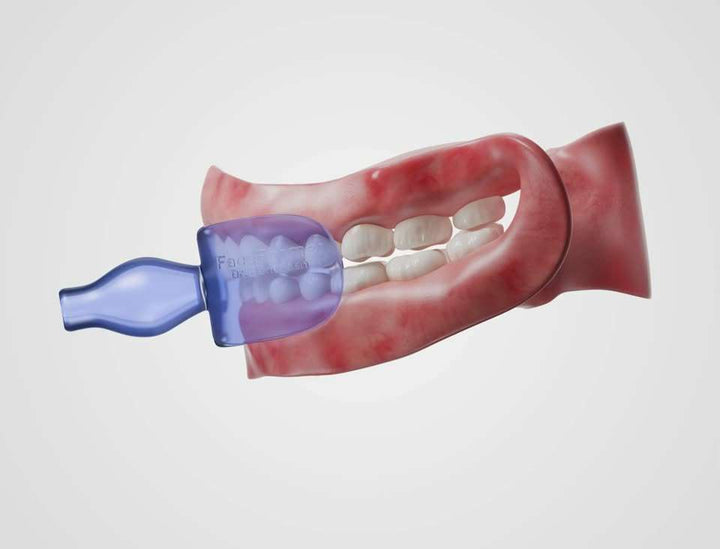
FaceFormer therapy step by step
From the assessment in the practice to the starting position and the basic exercise, through to the week-by-week schedule. Plus what helps you keep...
Areas of application of FaceFormer therapy
FaceFormer therapy is used in many specialities, from speech therapy to sleep medicine. This overview groups the areas of application from the exercise instructions...
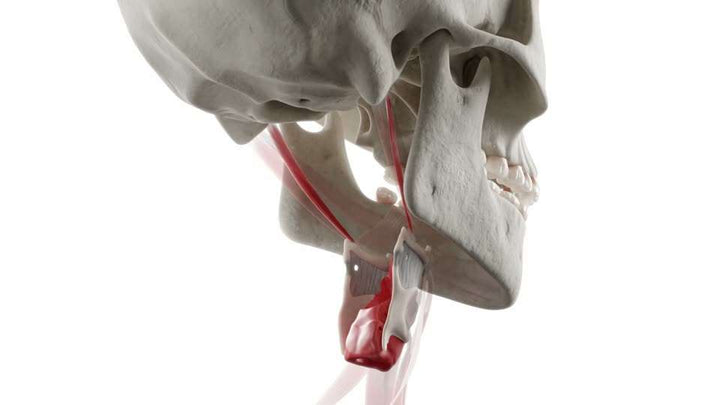
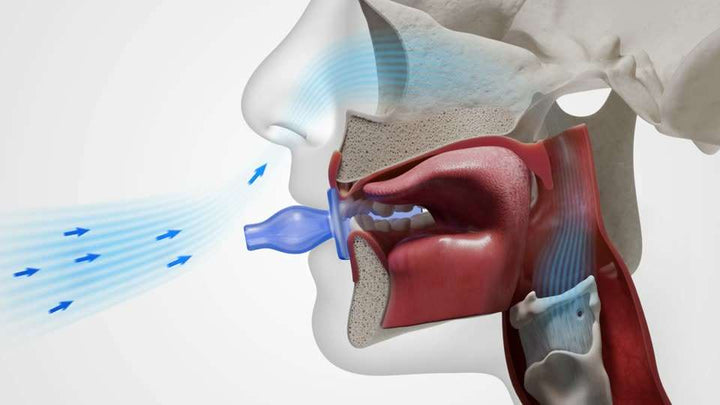
How FaceFormer therapy works
Breathing, swallowing and head balance form a functional circuit that stands at the start of many causal chains. This article shows why FaceFormer therapy...
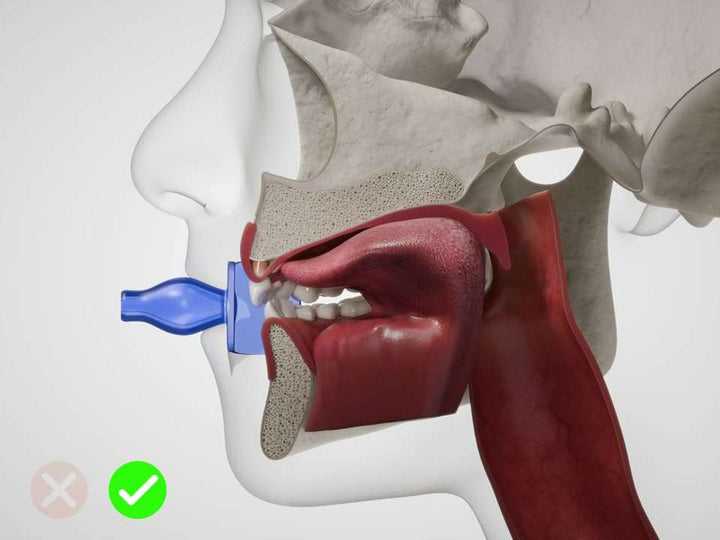
What is the FaceFormer? Device and therapy at a glance
FaceFormer therapy is an exercise method using a Class I medical device. Here you can find out how the lip wedge and membrane work,...
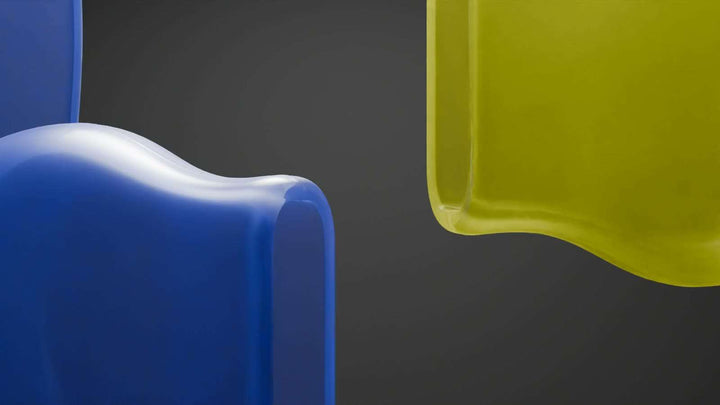
Material and manufacture of the FaceFormer
Which silicone the FaceFormer is made from, how it is tested and why the membrane and lip wedge are shaped the way they are....
Get started
Ready for the training?
The free FaceFormer app guides you through the basic exercises, counts along and reminds you of your sessions. If you wish, a practice from the practitioner directory can support you.
FaceFormer training aims to restore the physiological setting of the basic functions of breathing, swallowing and head balance, with lip closure and the tongue reference position, thereby creating the conditions under which complaints can improve. It does not replace a medical assessment. You can find practitioners near you in the practitioner directory.