

FULLY BOOKED - FaceFormer Seminar Frankfurt: CCDS Fundamentals & Practice (25.-26.09.2026)
FULLY BOOKED – registration is closed. Occasionally, places may become available due to cancellations: einkauf@drberndsen.de or phone +49 2303 89991.
Target group: speech and language therapists, speech therapists, occupational therapists, osteopaths, physiotherapists, myofunctional therapists, sports coaches, competitive athletes, dentists, orthodontists, ENT specialists, pulmonologists, orthopaedists, general practitioners, paediatricians, posturologists, educators, alternative practitioners (Heilpraktiker), pain coaches.
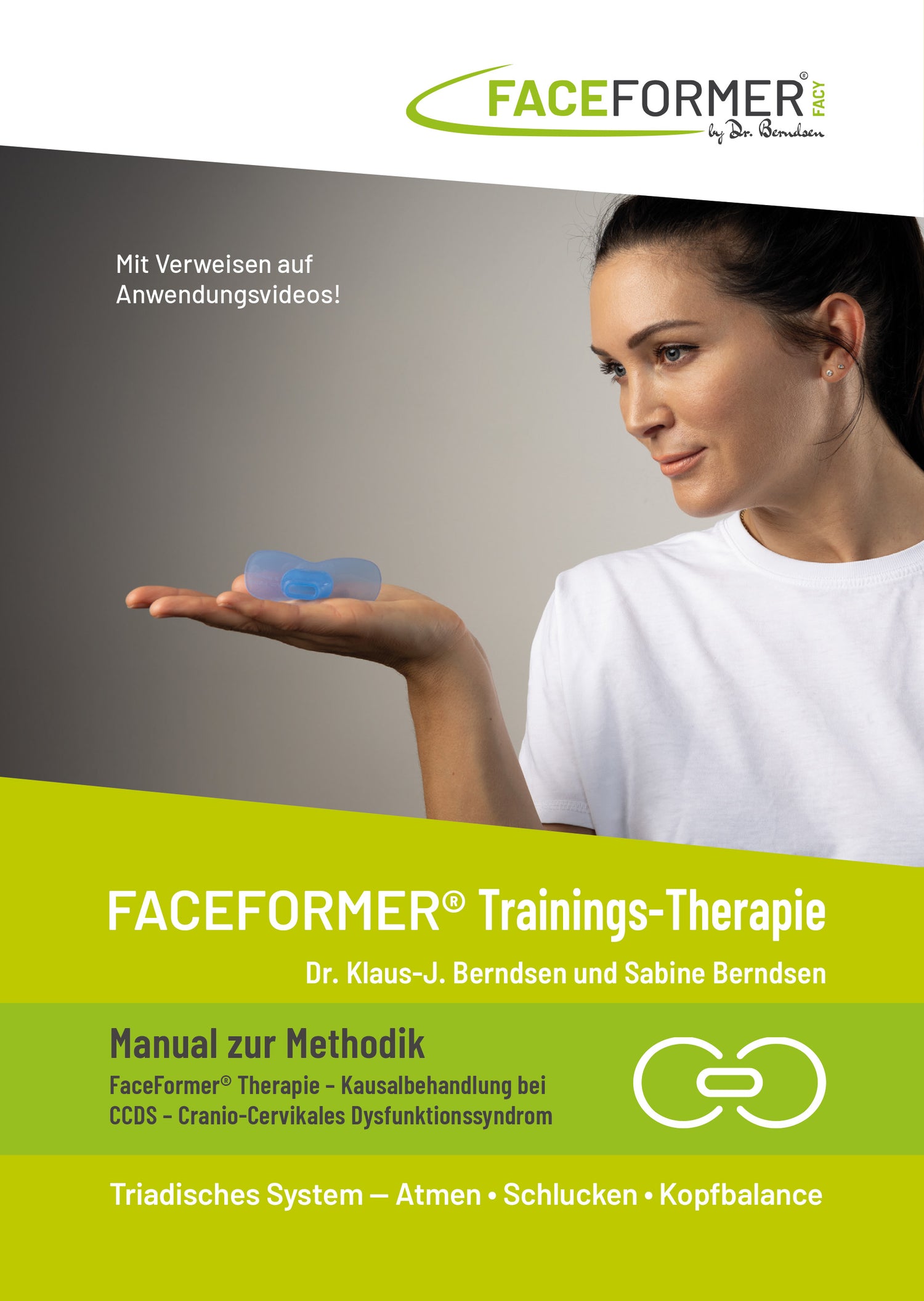
Please note: The seminar fee includes a FaceFormer training set and a book: “Manual zur Methodik der FaceFormer Therapie” (Manual on the Methodology of FaceFormer Therapy). Meals at our seminar hotels are also included.
Couldn't load pickup availability



FULLY BOOKED - registration for the seminar on 25–26 September 2026 is closed.
Occasionally, places become available due to cancellations. If you are interested, email us at einkauf@drberndsen.de or call us on +49 2303 89991 – we will get in touch as soon as a place becomes available.
Complaints that keep coming back: TMD and tooth migration, recurring neck and back pain, snoring, mouth breathing in children. Different specialties, different diagnoses - and often the same pattern behind them.
According to the craniocervical functional model (CCFM) developed at ISST Unna, such causal chains begin with a triadic functional pattern of breathing, swallowing and head balance. FaceFormer training therapy targets exactly this point - alongside your existing treatment, with the aim of long-term results that address the cause rather than merely controlling symptoms.
This perspective is holistic and interdisciplinary - and still receives little attention in everyday practice. The craniocervical functional model rethinks functional relationships: not as the sum of individual findings from different disciplines, but as a shared control system that connects them.

At a glance
Date: Fri & Sat, 25–26 September 2026, 9 am to 5 pm each day
Venue: NH Collection Frankfurt Spin Tower, Güterplatz 1, 60327 Frankfurt am Main
Continuing education: 17 CPD points, with certificate
Included: FaceFormer training set, methodology manual, catering at the seminar hotel
Prior knowledge: not required - suitable for beginners and experienced users alike
The three axes of the functional pattern


Systemic relationships
According to the CCFM, these control levels have effects far beyond the orofacial region - from the jaw via the cervical spine down to the trunk and pelvic floor. And through breathing, the chain reaches even further: how oxygen is taken in, transported and utilised affects metabolism right down to the individual cell - and thus the regeneration, growth and performance of the entire organism.
Accordingly, the model describes links to growth and morphogenesis, postural development, autonomic regulation, metabolic processes, and physical and cognitive performance. Functional disorders in this system are understood as the starting point of complex causal chains that run through many medical specialties.
In the seminar, you will systematically classify these relationships - and learn which examination findings point to them.

The diagnostic framework
The core of the first day is a clearly structured framework that enables you to record and evaluate findings systematically:
- Functional analysis: assessing the interplay of breathing, swallowing and head orientation
- Orofacial findings: tongue position and reference position, lip closure, chewing function
- Posture and statics: craniocervical links down to the trunk and pelvis
- Autonomic indicators: sleep quality, regeneration, resilience in everyday life
- Derivation: from findings to an indication-specific exercise programme

What the seminar offers your specialty
- Dentistry and orthodontics: classifying TMD, bruxism, tooth migration and relapse from a functional perspective
- Speech and language therapy: treating myofunctional disorders, swallowing and articulation in their craniocervical context
- Physiotherapy and osteopathy: including the control axis in the treatment of recurring back, neck and head complaints
- ENT and sleep medicine: addressing mouth breathing, snoring, and stress and sleep problems functionally
- Paediatrics and adolescent medicine: supporting orofacial development, mouth breathing and oral habits at an early stage


Seminar programme
Day 1 - Understanding and diagnosing: fundamentals of the craniocervical functional model, functional analysis and a clearly structured diagnostic framework that enables you to evaluate clinical findings systematically and derive therapeutic steps.
Day 2 - Applying and treating: structured exercise programmes with the FaceFormer, indication-specific application, variations for different patient groups, and case demonstrations with joint evaluation.


What you will take away
- A clear diagnostic framework you can use in your practice from Monday
- The ability to use FaceFormer therapy in a more targeted, indication-specific way
- Structured exercise programmes for your patient groups, from children to adults
- Discussion of your own cases with the developers of the method
- Listing in the practitioner directory on faceformer.de, which patients use to search for therapists near them
An example from practice: when the splint is not enough

A typical course: the splint brings relief, but the complaints return. TMD and bruxism can be understood beyond the splint - and tooth migration and relapse after orthodontic treatment can be counteracted in a targeted way.

Book as a team and save
2 places: 20% discount - €423.20 per place
3-4 places: 30% - €370.30 per place
5 or more places: 45% - €290.95 per place
The discount is deducted automatically in the basket.
Your speakers

Dr. Klaus-Jürgen Berndsen (ISST Unna) teaches the theoretical foundations: CCFM, functional analysis and diagnostics. Physicist, patholinguist and neuroscientist, long-standing lecturer at the University of Dortmund, working in neurological rehabilitation. He has headed the ISST in Unna since 1989.
Sabine Berndsen (ISST Unna) works there as a therapist herself and contributes her experience of day-to-day practice, from working with children to complex cases.
Together, they developed FaceFormer training therapy in 1999 and lead the seminar in person - in a small group, with room for your own cases.
Frankfurt: 25–26 September 2026
Address: Hotel NH Collection Frankfurt Spin Tower
Güterpl. 1, 60327 Frankfurt am Main
Day 1: 09:00 – 17:00
Day 2: 09:00 – 17:00

Don't feel like training alone?
FaceFormer group coaching
In this coaching session, you can not only clear up any uncertainties but also gain valuable information about the many ways the Faceformer can be used. Find out how it can help you with your complaints and benefit from Lena's expertise and the experiences of other participants. This meeting is the perfect opportunity to get comprehensive information and decide whether the Faceformer is the right tool for your health.
Tips for parents
Tips for parents
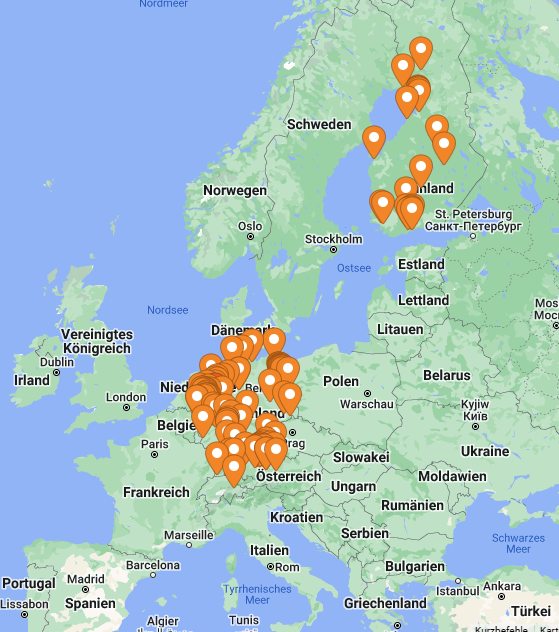
Looking for a doctor or therapist near you?
FaceFormer practitioner directory
Now also near you!