

Fixed anchors in your day
Link your training to something you do every day, such as brushing your teeth. With children, it is best for parents to practise along with them.
Therapy · Process and training
A few minutes a day, over several months. Here you can see how FaceFormer therapy works, how the basic exercise is done and what helps you stick with it.
Getting started
FaceFormer therapy is an exercise-based method. The nervous system learns the sequence of breathing, swallowing and head balance through many identical, clean repetitions until it runs on its own. You can train on your own with the free app. Seeing a practice is advisable if you would like your symptoms assessed or would like support along the way.
The practitioner directory lists practices in speech therapy, dentistry, orthodontics, physiotherapy and medicine that work with the FaceFormer.
The practice first observes how lip closure, the tongue reference position and head balance look when you are not paying attention to them, followed by targeted tests. These determine the appropriate modules.
You learn the starting position and the basic exercise at the practice in front of a mirror until you have the sequence down.
A few minutes three times a day. The free app guides you through the basic exercises, reminds you of your sessions and records your progress.
Roughly every four to six weeks, the practice compares the findings with your own baseline and adjusts the plan.
To find out more about the background of the therapy, read What is FaceFormer therapy and How does FaceFormer therapy work.
Before the first exercise
It applies to every exercise. Take a few minutes the first time.
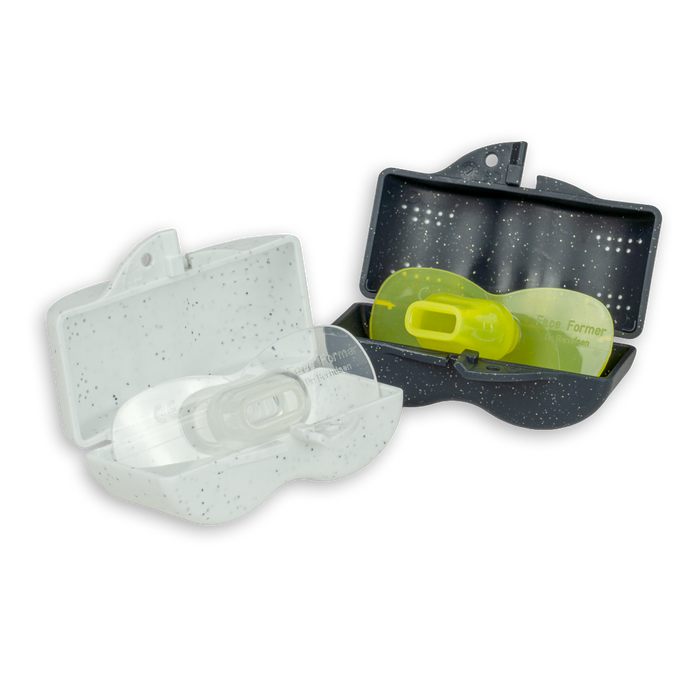
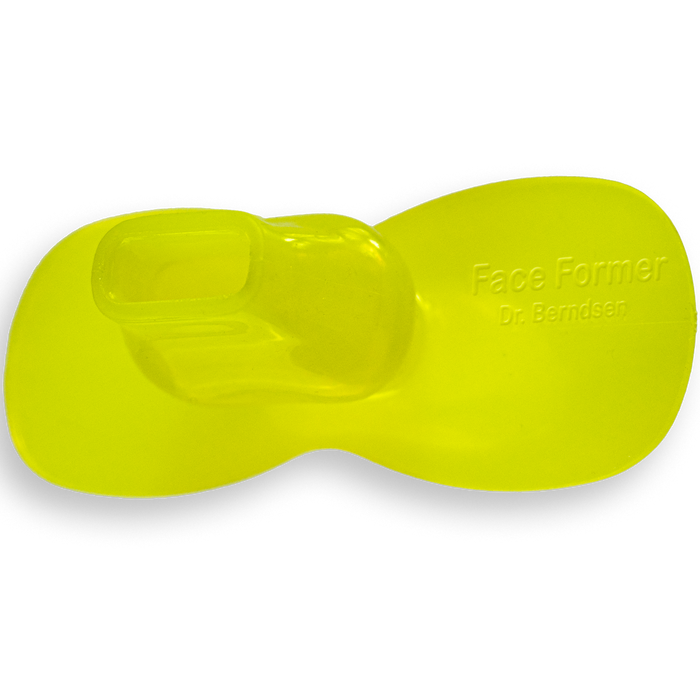
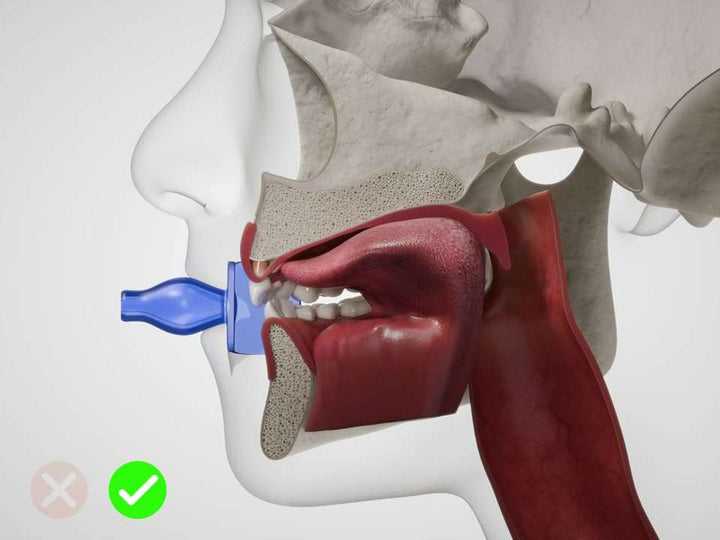
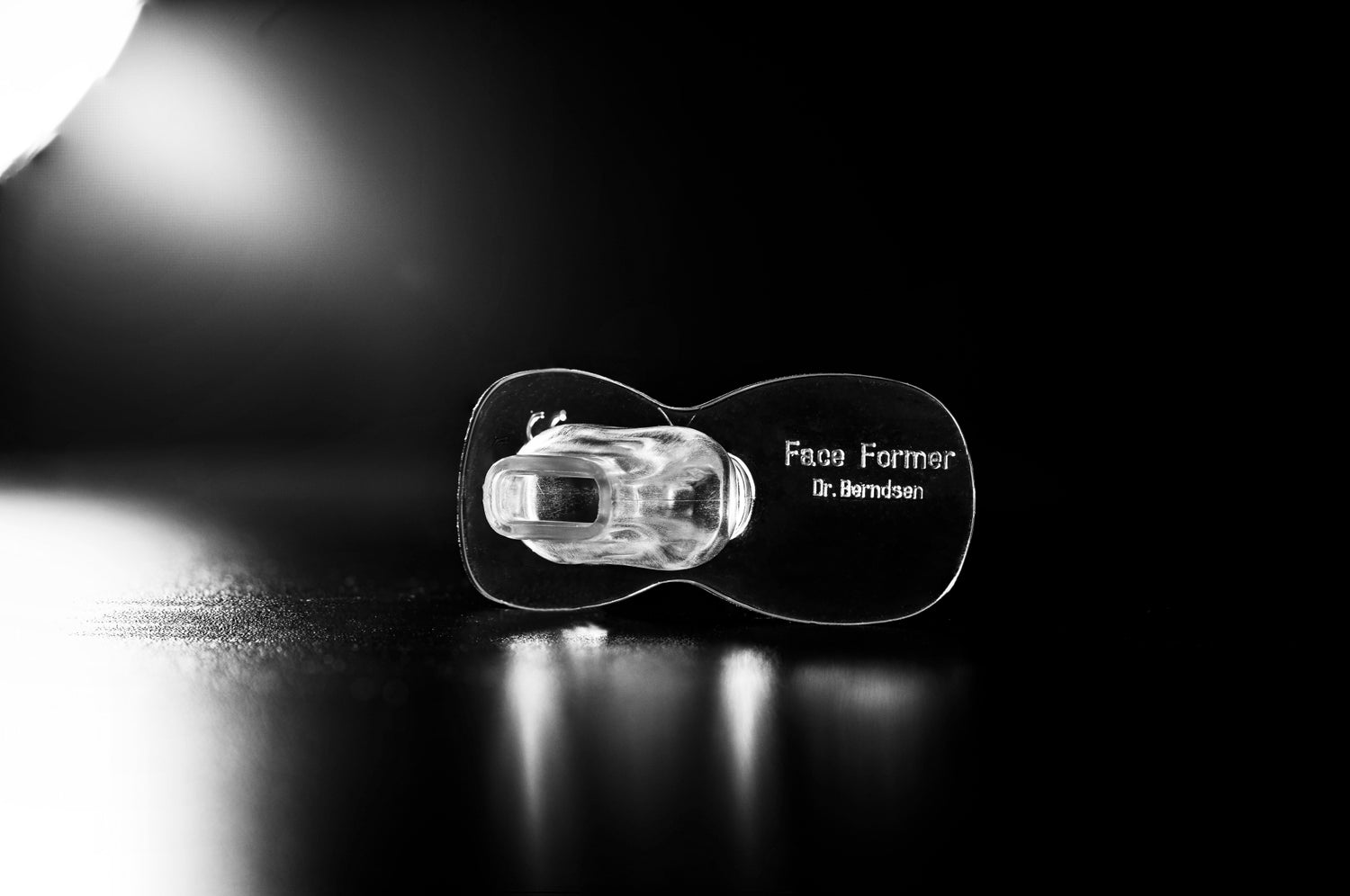
Insert the FaceFormer. The membrane sits in the oral vestibule, i.e. behind the lips and in front of the teeth. The lip wedge points horizontally outwards.
Tongue tip in its place. A few millimetres behind your upper front teeth, you will feel a small ridge on the palate. That is where the tip of the tongue rests, without touching the teeth. This is the tongue reference position, which many people know as the “tongue resting position”.
Teeth and lower jaw. The upper front teeth sit in front of the lower ones, and the lower jaw stays in its usual position.
Straighten your head, use your nose. Your neck is lengthened and you look straight ahead. Breathe through your nose throughout the entire training.

Module 1
The basic exercise combines lip closure, the tongue reference position and swallowing. Every further exercise builds on it.
What counts is the correct sequence, not strength. An imprecise repetition trains a different pattern. Start with a few repetitions and only increase once you have the sequence down. The app guides you through each phase and counts along.

Press the lip wedge together with your lips for 6 seconds while the tip of your tongue stays in its place.
Keep the tension in your lips, bite down briefly once with your back teeth and swallow once at the same time.
Release the pressure. Your lips enclose the lip wedge without force, and your teeth do not touch. 2 to 6 seconds, depending on your training level.
In week 1, do 8 repetitions per session, in week 2 do 14, and from week 3 onwards do 20.
From week 3, the pulling exercise is added. It works like the basic exercise, except that while pressing you gently pull the lip wedge forwards with your thumb and index finger, alternating between your right and left hand. You can find the basic exercise and the pulling exercise with 3D animation on faceformer.de.
The schedule
This is what the plan looks like for adults. A practice will tailor it to you.
Three times a day, for example in the morning, at midday and in the evening. You can already try wearing it at night.
The basic exercise increases to 20 repetitions, and the pulling exercise starts with 8, then 14, then 20. From now on, you wear the ZERO every night. If at first you find it next to your pillow in the morning, your old mouth breathing is still taking over during sleep. That is normal.
Modules such as the breathing exercise, the head balance exercise or pelvic floor can be added. They complement the basic exercise rather than replacing it.
The plan in the manual runs up to week 52 and ends with consolidation. Discuss with your practice when to cut back.
ZERO and ONE. Both are the same size and shape; only the hardness of the material differs. After a few weeks with the ZERO, adults switch to the firmer ONE (blue or clear) for daytime training, while continuing to use the ZERO at night. Both are available together in the set. Children up to the age of 10 stay with the ZERO and train according to their own plan from the practice. For young children, the practice decides from when and in what form training takes place.
Sticking with it
Three things help most with staying in a rhythm.
Link your training to something you do every day, such as brushing your teeth. With children, it is best for parents to practise along with them.

On a busy day, two sessions are better than three done irregularly.

After a few weeks, you can also wear the FaceFormer without exercising, for example at your desk or while watching TV. Check now and then whether you are breathing through your nose.
A lot feels unfamiliar at first. Swallowing with the FaceFormer is difficult, and the gums are irritated. This is common and usually improves with regular training. If you experience pain, take a break and speak to your practice or give us a call.
Questions
Expect it to take several months. How long it takes depends on how long a pattern has existed and how regularly you train. It is not possible to predict when symptoms will change.
Dr. Klaus-Jürgen Berndsen names three benchmarks. Nasal breathing, the tongue reference position and head balance are correct while you are thinking about something else. Your mouth stays closed at night too, without anything holding it shut. And you manage not only the one clean swallow during the exercise, but the many swallows of an entire day.
No. Once the pattern is established, in our view maintenance training twice a week is usually sufficient. You should not stop completely, though, because what is not practised fades.
Temporarily reduce to 8 repetitions, two to three times a day, and then increase again. Massage your gums with a moistened soft toothbrush. A little lip balm on both sides of the membrane makes training more comfortable. If you experience pain, take a break and speak to your practice.
Yes, the ZERO and ONE can be used together with orthodontic appliances. Discuss this with your practice and do not stop any medically prescribed treatment on your own.
Health insurers generally do not cover the cost of the FaceFormer itself. Please check with your practice how the treatment there is billed. Find out more under Health insurance and the FaceFormer.
Read more

Two seminar days with Dr. Klaus-Jürgen Berndsen and Sabine Berndsen for doctors, dentistry, orthodontics, speech therapy, physiotherapy and osteopathy. You get to know the...
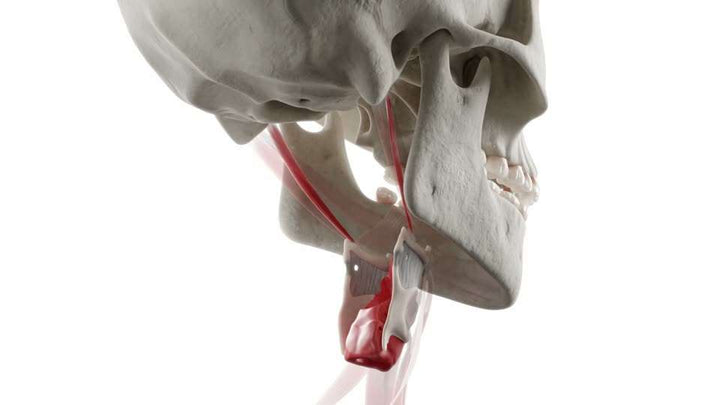
FaceFormer therapy is used in many specialities, from speech therapy to sleep medicine. This overview groups the areas of application from the exercise instructions...
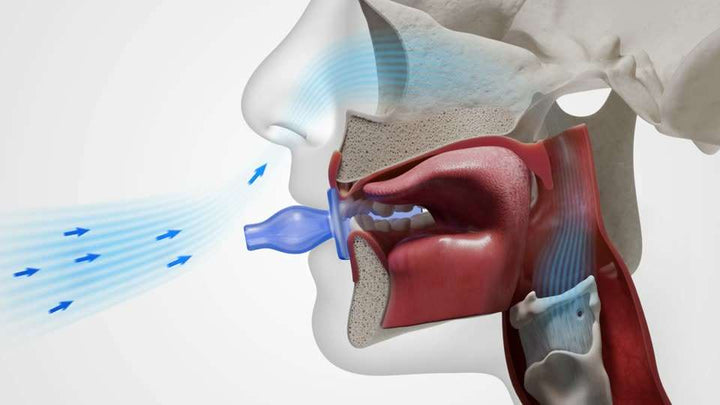
Breathing, swallowing and head balance form a functional circuit that stands at the start of many causal chains. This article shows why FaceFormer therapy...
FaceFormer therapy is an exercise method using a Class I medical device. Here you can find out how the lip wedge and membrane work,...
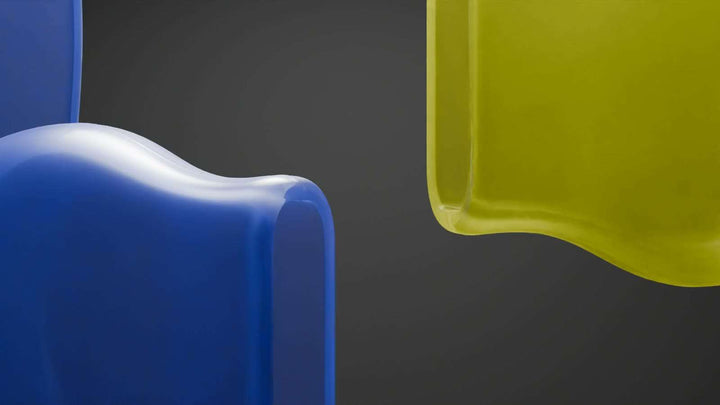
Which silicone the FaceFormer is made from, how it is tested and why the membrane and lip wedge are shaped the way they are....
Get started
The free FaceFormer app guides you through the basic exercises, counts along and reminds you of your sessions. If you wish, a practice from the practitioner directory can support you.
Both material hardnesses for getting started, day and night. The set for adults.
The softer FaceFormer for getting started, for children and for the night.
ZERO with hygiene box, plush bag and success book with stamp.
FaceFormer training aims to restore the physiological setting of the basic functions of breathing, swallowing and head balance, with lip closure and the tongue reference position, thereby creating the conditions under which complaints can improve. It does not replace a medical assessment. You can find practitioners near you in the practitioner directory.
Have an account?
Log in to check out faster.