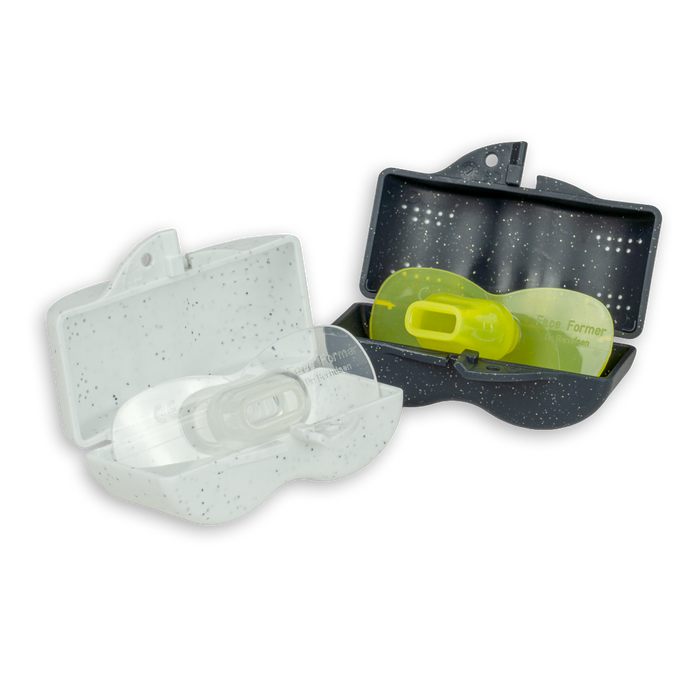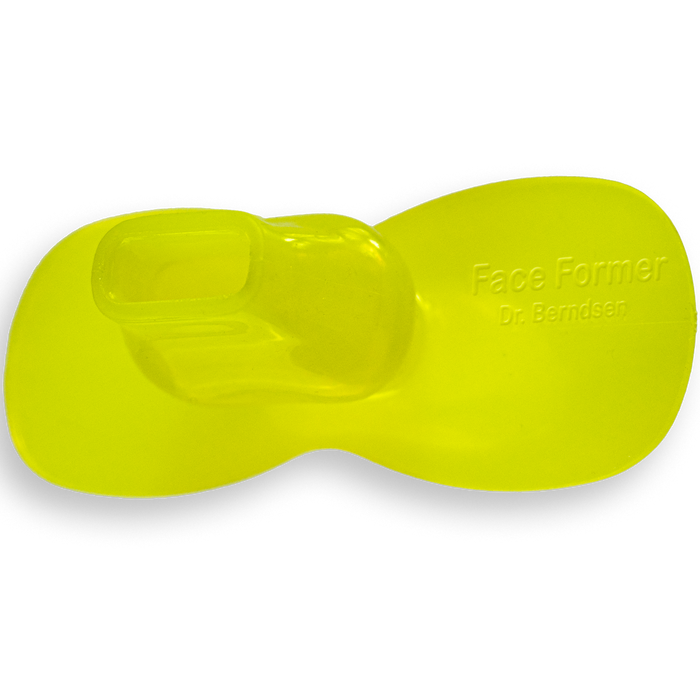

Guiding, not forcing
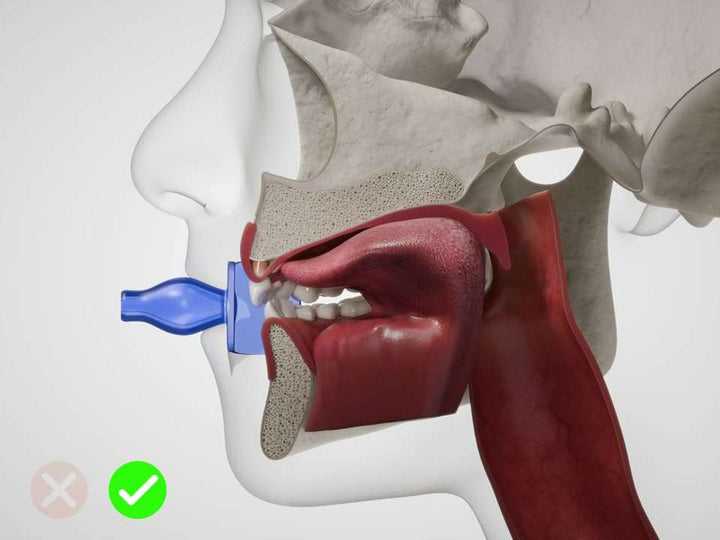
The lip wedge guides the lips towards the centre of the mouth and provides noticeable feedback.
Therapy method · How it works
Breathing, swallowing and head balance run continuously, day and night. FaceFormer therapy trains the pattern of these three basic functions.
The model
Breathing sets the rhythm for safe swallowing, swallowing maintains tension in the mouth and throat, and head balance keeps the airway and swallowing pathway clear.
The nose filters, warms and humidifies the air. At the same time, nasal breathing gives the nervous system a steady rhythm.
Several hundred to a thousand times a day, even during sleep. Each time, the tongue rests against the palate and the lips close.
A finely tuned group of muscles balances the head on the spine. Its position helps determine how open the airway is.
Each function supports the other two. A function corrected in isolation will not maintain its sequence as long as the others remain in the old pattern. That is why the FaceFormer trains all three together. Learn more about the device in the article What is FaceFormer therapy.
The causal chain
When the interplay falls out of sync, the body compensates and the effort increases. Dr. Klaus-Jürgen Berndsen describes four stages.
Breathing takes place through the mouth, the tongue rests low instead of against the palate, the head moves forward. Nothing can be felt yet.
Other muscles take over, for example in the neck, so that the airway stays open.
Over time, changes may develop such as a narrow, high palate, misaligned teeth or altered posture.
Snoring, jaw joint or neck complaints are often the end point of a development that began years earlier.
The triad stands at the beginning of many such chains; many complaints may be related to it, but not all. What the training achieves depends on how long a pattern has existed, whether structures have changed and how regularly you practise. Sabine and Dr. Klaus-Jürgen Berndsen summarise recurring findings as Cranio-Cervical Dysfunction Syndrome (CCDS), a working model from clinical practice, not a diagnosis from an international classification. Areas of application are covered in the article Applications and specialist fields.
The control pattern
The nervous system learns compensatory patterns through repetition. After thousands of breaths and swallows, the compensation feels normal and the correct sequence feels unfamiliar.
If you only increase muscle strength, you simply perform the old pattern more forcefully.
FaceFormer therapy targets the control pattern, with many identical, precise repetitions at short intervals.
The lip wedge guides the lips towards the centre of the mouth and provides noticeable feedback.

The membrane behind the lips seals the oral cavity. When you swallow, the tongue rests against the palate.

Compensatory movements don't work with the FaceFormer. The brain actively plans and corrects, and that is how it learns.
The return
Breathing, swallowing and head movements are practised even before birth and are laid down in the brainstem. Compensatory patterns overlay this pattern but do not erase it.
The brainstem controls breathing, swallowing and tongue movement together. That is why lip closure has an effect that extends to the tongue, soft palate, nose and head balance.
The incisive papilla behind the upper front teeth is densely packed with nerve endings. The tongue orients itself to it.
An imprecise exercise trains a different pattern. That is why each precise repetition counts for more than many quick ones.
In everyday life
During the day, you practise consciously, three times a day for a few minutes. After a few weeks, you also wear the FaceFormer ZERO at night, without practising. Mouth breathing takes hold most easily during sleep; that is where it supports lip closure and nasal breathing.
A pattern has been relearned when it runs without conscious attention, outlasts the training and holds up in everyday life. You can find the exercise plan in the article How FaceFormer therapy works.
There are limits. A better pattern cannot create space where the anatomy is too narrow. Worn tooth substance or damaged joint surfaces do not regenerate, but the load on them can be changed. And the training depends on regularity.
Research
In a randomised study at the University Medical Center Hamburg-Eppendorf, 45 children and adolescents trained for six months, 26 with the FaceFormer and 19 with myofunctional therapy without a device. 30 were followed up (17 with, 13 without the device); the percentages refer to these.
Lip strength increased in both groups, faster with the FaceFormer. No difference was found in pronunciation. The study makes no statement on long-term stability.
Schwan M, doctoral thesis, University of Hamburg 2007. Korbmacher et al., Int J Orofacial Myology 2004. Randomised, 45 children and adolescents, 30 followed up after six months (17 with, 13 without the device).
Questions
No. What matters is that the lips, tongue, swallowing and breathing work together in the correct sequence. Start with a few precise repetitions.
No. It can be combined with many treatments, such as braces or speech therapy. Do not stop any medically prescribed therapy on your own; talk to your practice instead.
For children and adults. For young children, the practice decides from what age and in what form training takes place. Children up to the age of ten train with the softer FaceFormer ZERO.
Read more

Two seminar days with Dr. Klaus-Jürgen Berndsen and Sabine Berndsen for doctors, dentistry, orthodontics, speech therapy, physiotherapy and osteopathy. You get to know the...
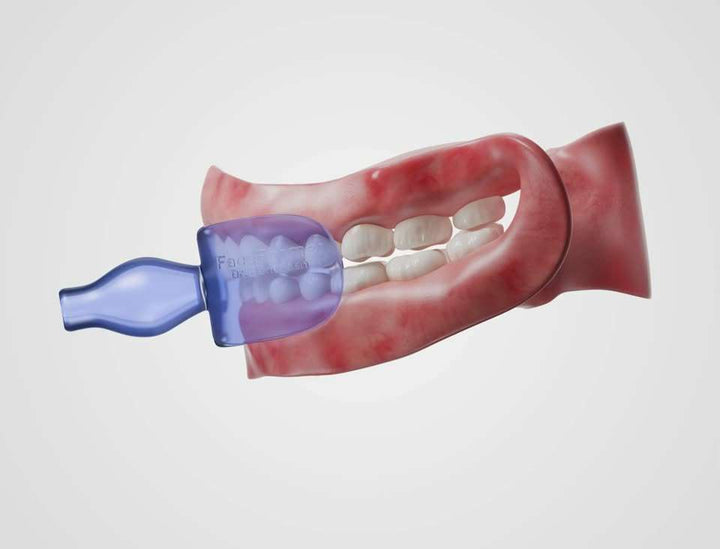
From the assessment in the practice to the starting position and the basic exercise, through to the week-by-week schedule. Plus what helps you keep...
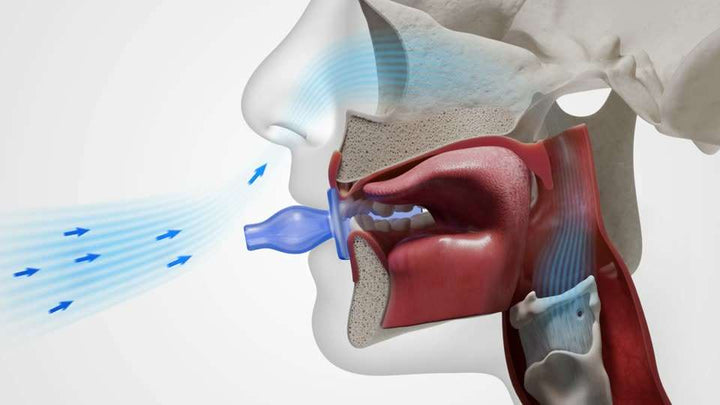
FaceFormer therapy is used in many specialities, from speech therapy to sleep medicine. This overview groups the areas of application from the exercise instructions...
FaceFormer therapy is an exercise method using a Class I medical device. Here you can find out how the lip wedge and membrane work,...
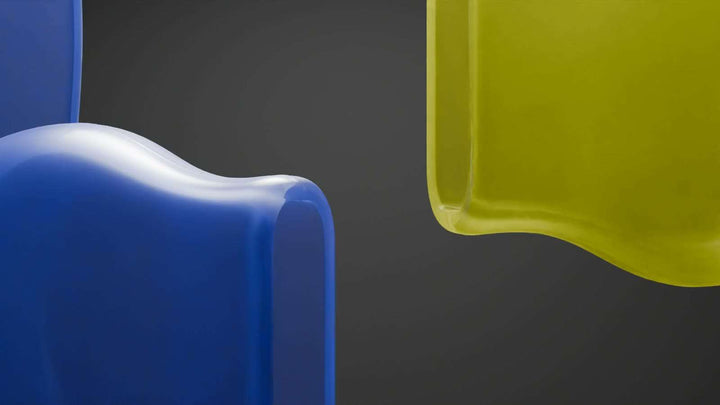
Which silicone the FaceFormer is made from, how it is tested and why the membrane and lip wedge are shaped the way they are....
Get started
The free FaceFormer app guides you through the basic exercises, counts along and reminds you of your sessions. If you wish, a practice from the practitioner directory can support you.
Both material hardnesses for getting started, day and night. The set for adults.
The softer FaceFormer for getting started, for children and for the night.
ZERO with hygiene box, plush bag and success book with stamp.
FaceFormer training aims to restore the physiological setting of the basic functions of breathing, swallowing and head balance, with lip closure and the tongue reference position, thereby creating the conditions under which complaints can improve. It does not replace a medical assessment. You can find practitioners near you in the practitioner directory.
Have an account?
Log in to check out faster.